


ICNME 2026 Speakers
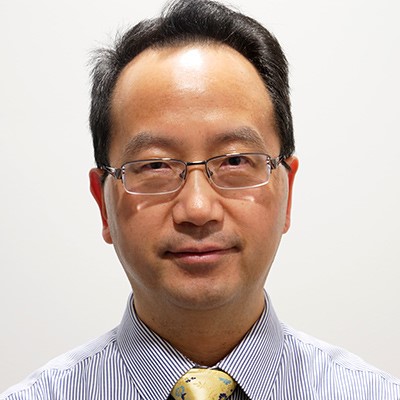
Prof. Yimin Chao
Foshan Xianhu Laboratory, China
Bio:
Yimin Chao was appointed as a Professor in the School of
Chemistry at University of East Anglia on the basis of an
established track record in investigating nanostructured
systems from the basic physical and chemical mechanisms of
synthesis, through their optical and electronic properties
to scientific and industrial applications. Dr Chao has a
wide range of experiences in synthesis of nanoscale
materials, analysis of their impacts on environmental and
biological systems, and sustainable applications.
Since 2001, he has published over 100 papers in leading
international refereed journals such as Nature
Nanotechnology and Advanced Materials. He has presented his
research results in more than 50 international conferences,
either as Plenary speaker or Keynote speaker. Funding from
the Royal Society/Wolfson Foundation and the University
enabled the setting up of the Sustainable Energy Innovation
Laboratory of which he is the Head. He is a Fellow of Royal
Society of Chemistry (FRSC), Chair of Chemical Nanoscience
and Nanotechnology Network in RSC. He is serving as a member
of UKRI Future Leaders Fellowships Peer Review College and
Sift/interview Panel College, and EPSRC Peer Review College,
and also acting as funding reviewer for various other
funding bodies, such as Leverhulme Trust, Cancer Research
UK, National Natural Science Foundation of China, and Saudi
Arabic government. Current research themes include design
and functionalization of Si quantum dots (Si-QDs), and their
applications in lithiun-ion batteries and thermoelectric
modules.
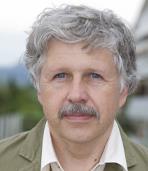
Prof. Arcady Zhukov
University of Basque Country, Spain
Bio: Dr. Arcady Zhukov received Ph.D. degree from the Institute of Solid State Physics (Chernogolovka) of the Russian Academy of Science, in 2010- Doctor of Science (habilitation) in Moscow State "Lomonosov" University. Present employment (since 2011): Ikerbasque Research professor at the Advanced Polymers and Materials of the University of Basque Country, Spain. He has published more than 700 referred papers in the international journals (total number of citations updated May 2026 is above 13000, Citation H-index 63(WOS)/ above 17900 and H=73 (Google scholar)). A. Zhukov is included in the 'Ranking of the World's Top 2% Scientists" elaborated by Stanford University. A. Zhukov edited conference proceedings, chaired several international conference (Donostia International Conference on Nanoscaled Magnetism (DICNMA), III Joint European Magnetic Symposia, 24th International Symposium on Metastable, Amorphous and Nanostructured Materials (ISMANAM 2017)…), several sessions at various international Conferences, gave more than 100 plenary, keynote or invited talks at various international conferences. He is an associate Editor of IEEE Magnetic letters and International Journal on Smart Sensing and Intelligent Systems, member of several editorial boards and various committees of International Conferences (MMM, Intermag, joint- MMM-Intermag, MISM, ICSM…). A. Zhukov edited two books: "Novel Functional Magnetic Materials" and "High Performance Soft Magnetic Materials", wrote two books: "Magnetic properties and applications of ferromagnetic microwires with amorphous and nanocrystalline structure" and "Magnetic sensors based on thin magnetically soft wires with tuneable magnetic properties and its applications", more than 20 book chapters (including one published in the Handbook of Magnetic Materials ed. by Prof. K. Buschow). In 2000 A. Zhukov funded the spin-off Company Tamag Iberica S.L. in which he is currently the scientific supervisor.
Prof. Kazuo Umemura
Tokyo University of Science,
Japan
Bio:
Dr. Kazuo Umemura is a full professor of Tokyo University of
Science. His specialty is biophysics, especially,
nanobioscience and nanobiotechnology. One of his recent
interests is nanoscopic research of hybrids of biomolecules
and carbon nanotubes (CNTs). Unique structures and
physical/chemical properties of the hybrids are promising in
biological applications such as nanobiosensors and drug
delivery.
Dr. Umemura received his B.S. degree in Physics from Nagoya
University. His M.S. and Ph.D. degrees were given from Tokyo
Institute of Technology. After working at several
institutes/universities as a researcher in Japan and in
China, he became a professor of Tokyo University of Science.
Kagurazaka campus of Tokyo University of Science is located
at the center of Tokyo, so five subway/railway lines reach
in front of the campus.
Previous Speakers

Prof. Kwang Leong Choy
Duke Kunshan University,
China
Bio:
Kwang Leong Choy [D.Phil. (Oxon), DSc] is the Professor of
Materials Science at Duke Kunshan University (DKU). Prior to
this, she was a Professor of Materials Discovery and the
founding Director of the UCL Institute for Materials
Discovery at University College London (UCL). She also held
a Chair in Materials, Faculty of Engineering, University of
Nottingham (2002-2014), where she was the Research Director
of the University Innovation Centre and University’s
Knowledge Exchange Board. Professor Choy earned her D.Phil.
in Materials Science from the University of Oxford, where
she was awarded the Hetherington Prize and Oxford
Metallurgical Society Award. Additionally, she has received
accolades such as the Grunfeld Medal Prize and Kroll Medal &
Prize. She has been awarded the Fellow of the Institute of
Materials, Mining and Minerals (FIMMM) and Fellow of the
Royal Society of Chemistry (FRSC). She has authored over 300
publications, including 4 books and 20 patents, given over
150 keynote papers/invited lectures and conference session
Chairman. She also helped to establish two university
spin-out companies. Her expertise has been recognized
through Guest Professorships at the University of Uppsala
(2001/03), Ningbo Institute of Materials Technology and
Engineering (NIMTE, 2010/2012), and a Chinese Academy of
Sciences (CAS) Visiting Professorship for Senior
International Scientist (2011/2013).
She is leading a multidisciplinary research team and
collaborating closely with material engineers, chemists,
physicists, bioengineers, nanobiotechnologists, and
engineers to create new opportunities in materials creation,
discovery and utilization. Her team focuses on developing
high-performance, eco-friendly, and cost-effective processes
for the production of new nanostructured materials,
nanocomposites, thin films, and coatings. These materials
find applications in various fields, including solar cells,
clean energy generation, energy storage, electrical systems,
optoelectronics, environmental sustainability, healthcare,
and biomedicine. Professor Choy has successfully obtained
and managed numerous multimillion-pound national and
European flagship research programs, fostering extensive
collaboration between academia and industry. In addition,
she has established state-of-the-art nanomaterials,
innovative thin/thick film processing, and characterization
facilities, representing a significant investment in
cutting-edge infrastructure.
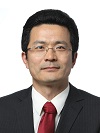
Prof. Yanwei Ma
Chinese Academy of Sciences, China
Bio: Prof. Ma Yanwei is currently the director of the Applied Superconductivity Laboratory and a full professor in Chinese Academy of Sciences. He was selected into "Hundred-Talents Program" and he received “National Science Fund for Distinguished Young People”. He is also the national candidate of the "100 Million Talent Project" in the new century, the recipient of the special allowance of the State Council, the winner of the 7th "Overseas Chinese Returnees Contribution Award" and the 100 leading talents in Beijing. He received Ph.D. degree from Tsinghua University in 1996. Then he ever worked at Institute for Materials Research, Tohoku University in Sendai, Japan, National Institute for Materials Science (NIMS) in Tsukuba, Japan, and The French National Center for Scientific Research in France from 1998-2004. He has been engaged in the research on superconducting and nano-energy storage materials, and devices for years, and has achieved systematic innovation in the preparation of new superconducting materials, graphene quantitative synthesis and high-performance supercapacitor development and other directions. Some related research results have been selected in major scientific and technological achievements exhibition in "National Eleventh Five-Year Plan" by the Ministry of Science and Technology. His systematic research on high-performance iron-based superconducting materials has led the development of related field, and his development of the first 100-meter scale iron-based superconducting long line in the world is a milestone in the practical progress of iron-based superconducting materials. So far, he has published more than 260 papers (SCI) cited by SCI over 6500 times, and has more than 40 national invention patents.
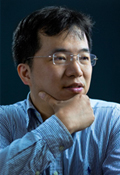
Prof. Qiang Zhang
Tsinghua University, China
Google Scholar Citations: 56011, h-index: 126
Bio: Prof. Qiang Zhang graduated from Tsinghua University, P. R. China, in 2004, where he continued doing research on carbon nanomaterials and obtained his PhD in chemical engineering in 2009. He subsequently held Research Associate/Postdoc Research Fellow positions in the Case Western Reserve University, USA, and Fritz Haber Institute of the Max Planck Society, Germany. Now he is a professor at the Chemical Engineering Department, Tsinghua University, China. He held the Newton Advanced Fellowship from Royal Society, UK and the National Science Fund for Distinguished Young Scholars. He is awarded as Zhaowu Tian award from International Society of Electrochemistry, Science and Technology Award for Chinese Youth, and First Prize of Natural Science of Ministry of Education. He is selected as highly cited researchers at 2017-2020 by Clarivate Analytics. His current research interests are advanced energy chemistry and energy materials, including dendrite-free lithium metal anode, lithium sulfur batteries, and energy electrocatalysis, especially the structure design and full demonstration of advanced energy materials in working devices. His h-index is 116 now.
Prof. Takashige Omatsu
Chiba University, Japan
Fellow of JSAP, OSA, SPIE
Bio: Takashige Omatsu (B.S. (1983), Ph.D. (1992) from the University of Tokyo) is a professor of nano-science division of a faculty of engineering in Chiba University.His research intersts cover a variety of areas, such as nonlinear optics, solid-state and fiber lasers, singular optics, and super-resolution spectroscopy. Recent work has focused on chiral control of nano-structures by angular momentum of light. Such chiral nano-structures will potentially provide a new scientific aspect to metamaterials, plasmonics, and silicon photonics, and they might also enable us to develop nanoscale imaging systems with chiral selectivity. He has already published >100 refereed journal articles, and he has performed >20 invited presentations of major international conferences, including CLEO, CLEO Pacific-Rim, CLEO Europe, LEOS, and ICALEO meetings. He has been appointed as an Associate Editor of Optics Express during 2006-2012. He is also on the editorial board of Applied Physics Express. He is currently working as a steering committee member of the conference on the laser and optoelectronics pacific-rim (CLEO Pacific-rim). Professor Omatsu is a Fellow of the Japan Society of Applied Physics, and a Senior Member of the Optical Society of America. He is also Visiting Professor, Xinjiang Normal University, China.
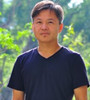
Prof. Ying-Hao Eddie Chu
National Chiao Tung University, Taiwan
Google Scholar Citations: 26404, h-index: 76
Bio: Professor Ying-Hao Chu received his PhD in the Department of Materials Science & Engineering from National Tsing-Hua University in 2004. Then, he joined University of California, Berkeley as a postdoc. In 2008, he acquired an assistant professorship in the Department of Materials Science & Engineering at National Chiao Tung University. He was promoted to an associate professor in 2015, and then he was promoted to a professor in 2018. From 2019, he was appointed as a distinguished professor. Since 2013, he has an adjunct position in institute of physics, Academia Sinica. In 2014 he started an adjunct position in the Department of Electrophysics, National Chiao Tung University. From 2016 to 2018, he had the adjunct position in the Material and Chemical Research Laboratories, Industrial Technology Research Institute and the International College of Semiconductor Technology at National Chiao Tung university. From 2019, he has an appointment with ACS Applied Electronic Materials to be an associate editor. His research is highly focused on complex functional oxides and strongly correlated electron systems. He has extensive experience in the use of advanced characterization techniques to understand and manipulate functional oxide heterostructures, nanostructures, and interfaces. His current goal is try to create a pathway to use high quality oxide heteroepitaxy for soft transparent technology. Now, he is a pioneer with the most publication along this research direction. He has published more than 280 papers (Web of Science: >15000 citations, h-index=58; Google Scholar: >26000 citations, h-index=76) in academic journals, including Science series (2), Nature series (~25), PNAS (2), ACS Nano & Nano Letters (>25), Advanced (Energy or Functional) Materials (>20), Nano Energy (>5), Physical Review series (>25), Applied Physics Letters (~40).
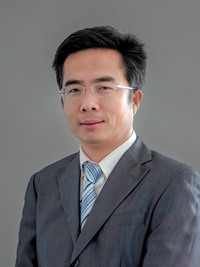
Prof. Guanglei Cui
Qingdao Institute of
Bioenergy and Bioprocess
Technology, Chinese Academy
of Sciences, China
Bio: Professor Guanglei Cui obtained his Ph.D. degree at Institute of Chemistry, CAS, in 2005. From 2005 to 2009, he had worked at Max-Planck-Institute for Polymer Research and Max-Planck-Institute for Solid State research as a postdoctoral scientist on Ener. Chem. Project. Then he joined in the Qingdao Institute of Bioenergy and Bioprocess Technology, CAS as full professor from 2009. He is the leading scientist of the National Key R&D Program (high energy density solid state lithium batteries technology) and the state council special allowance expert, He is a recipient of the Hundred Talents Program of CAS in 2009, the Taishan Scholars of Shandong Province in 2015, the National Science Fund for Distinguished Young Scholars in 2016, Young and middle-aged leading scientists, engineers and innovators in 2018, Ten Thousand Talent Program in 2019. He is the director of the Academic degrees Committee and the vice-director of the Academic Committee of the Qingdao Institute of Bioenergy and Bioprocess Technology, the executive director of the Qingdao Industrial Energy Storage Research Institute, and the director of Qingdao Key Lab of Solar Energy Utilization and Energy Storage Technology. He is the member of the International Polymer Electrolytes Committee, Chinese Society of Electrochemistry, Chinese Society of Organic Solids and Chinese Society of Solid State Ionics. His research interests are low-cost and highly efficient energy-storage and conversion devices. He has published 300 papers on peer-reviewed journals of Angew. Chem. Int. Ed.、J. Am. Chem. Soc.、Adv. Mater.、Adv. Energy Mater.、Energy Environ. Sci.、Coordin. Chem. Rev.、Prog. Polym. Sci., most of which have been indexed by SCI. All the papers have been other-cited by more than 10000 times.

Assoc. Prof. Cong-Ying Wen
China University of
Petroleum (East China),
China
Bio: Assoc. Prof. Cong-Ying Wen received her PhD (2014) in analytical chemistry from Wuhan University. She is now working at China University of Petroleum (East China). Her research interests are focused on the construction and bioapplications of nanomaterials, such as quantum dots, magnetic nanoparticles, noble nanoparticles, and so on. She was rated as high-level talent of Huangdao in 2016 and received Science and Technology Award (the first prize) of Qingdao Society for Analysis and Testing in 2022. She has presided several science research programs, such as national natural science foundation of China, funds of Shandong province, fundamental research funds for the central universities, etc. She has published many papers on peer-reviewed journals of ACS Nano, Advanced Functional Materials, Analytical Chemistry, Small, Journal of Hazardous Materials and so on.
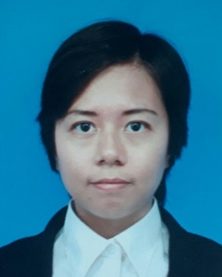
Assoc. Prof. Bernice Mae Yu
Jeco-Espaldon
University of San Agustin,
Philippines
Bio:
Dr. Bernice Mae Yu Jeco-Espaldon is an Adjunct Associate
Professor at the University of San Agustin, College of
Technology. She is a recipient of the Balik (Returning)
Scientist Program grant awarded by the Department of Science
and Technology - Philippine Council for Industry, Energy and
Emerging Technology Research and Development (DOST-PCIEERD)
from August 2024. She is hosted by the Center for Advanced
New Materials, Engineering, and Emerging Technologies
(CANMEET) at the University of San Agustin.
Dr. Yu Jeco-Espaldon received her B.S. Degree in Electronics
and Communications Engineering from the University of Santo
Tomas in 2011, and her M.S. and Ph.D. Degrees from The
University of Tokyo in 2017 and 2020, respectively. Her
research interests include the fabrication, processing, and
characterization of inorganic solar cell devices, as well as
the search for new organic nanomaterials suitable for
biophotovoltaics and other optoelectronic devices
application.
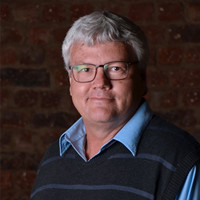
Prof. Hendrik C Swart
University of the Free
State, Republic of South
Africa
Bio: Hendrik C Swart is an Internationally acclaimed researcher and a senior professor in the Department of Physics at the University of the Free State. He has been key in developing processes to synthesize and deposit thin films of various luminescent semiconductor nano-particles, enhancing the color, luminescent intensity, and lifetime, thereof. His research led to the establishment of a strong group working on luminescent materials. He has more than 930 publications in international peer-reviewed journals, 120 peer-reviewed conference proceedings, and is editor/author or co-editor/author of 100 book chapters and or books with more than 27870 cited author references, H-index of 74, i10 index of 641 on google scholar. Prof Swart received Highly Ranked Scholar status (Lifetime) for ranking 16th in the discipline of Phosphors. Highly Ranked Scholars – Lifetime refers to distinguished authors, including those who are currently active, retired, or deceased. These scholars are recognized for their exceptional lifetime scholarly contributions, placing them in the top 0,05% of all scholars. Their achievements are evaluated across four categories: overall (across all fields), within their specific field of study, within their discipline, and across all specialties they are associated with. Additionally, Prof Swart received Highly Ranked Scholar status (prior five years) for ranking first in Condensed Matter Physics, 42nd in Physics, 155th in Sensors, 207th in Physical Science and Mathematics, and 969th in all fields.
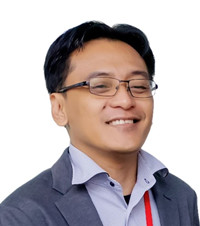
Prof. Rinlee Butch Cervera
University of the
Philippines Diliman,
Philippines
Bio: Dr. Rinlee Butch Cervera is a Full Professor and Head of the Energy Storage & Conversion Materials Re-search Laboratory at the Department of Mining, Metallurgical, and Materials Engineering, and currently serves as Program Coordinator of the Energy Engineering Graduate Program at the University of the Philip-pines Diliman. A distinguished researcher and innovator in materials and energy engineering, Dr. Cervera has led numerous research and development initiatives in renewable and alternative clean energy. His work focuses on energy storage systems, including fuel cells, hydrogen energy, lithium-based batteries, battery recycling and mining, valuable metals recovery, and waste-to-energy conversion. He is also actively engaged in techno-economic feasibility studies, multi-criteria decision analysis, and technology assessment on energy-related topics. Dr. Cervera holds a BS in Materials Engineering from UP Diliman, an MS from Universiti Sains Malaysia, and a PhD from the University of Tokyo. He completed postdoctoral fellowships at the University of Tokyo and the National Institute for Materials Science (NIMS) in Japan. Renowned for his technical expertise and scientific leadership, Dr. Cervera has received numerous prestigious awards, including the DOST Balik Scientist Award, the Outstanding Young Scientist Award from the National Acad-emy of Science and Technology (NAST), The World Academy of Sciences (TWAS) Young Affiliate Award, the David M. Consunji Award for Engineering Research, and recognition as one of the Top 100 Asian Scientists in 2023. He actively serves on the technical committees of various international and national conferences and workshops and is a member of several technical working groups involved in shaping research agendas, policy recommendations, and standards in the fields of energy, materials, and sustainability. Dr. Cervera is also a member of several leading professional organizations, including the Philippine-American Academy of Science and Engineering (PAASE), the Philippine Association for the Advancement of Science and Tech-nology (PhilAAST), the Solid State Ionics Society, The Electrochemical Society (ECS), and the Energy Re-search Institutes Network (ERIN). He is the founding president of the Institute of Materials Engineers of the Philippines (IMEP) and currently serves as Editor-in-Chief of the Philippine Engineering Journal (PEJ).